Two years in, the studio question is no longer whether to use generative tools. It is which part of the work they are allowed to touch.
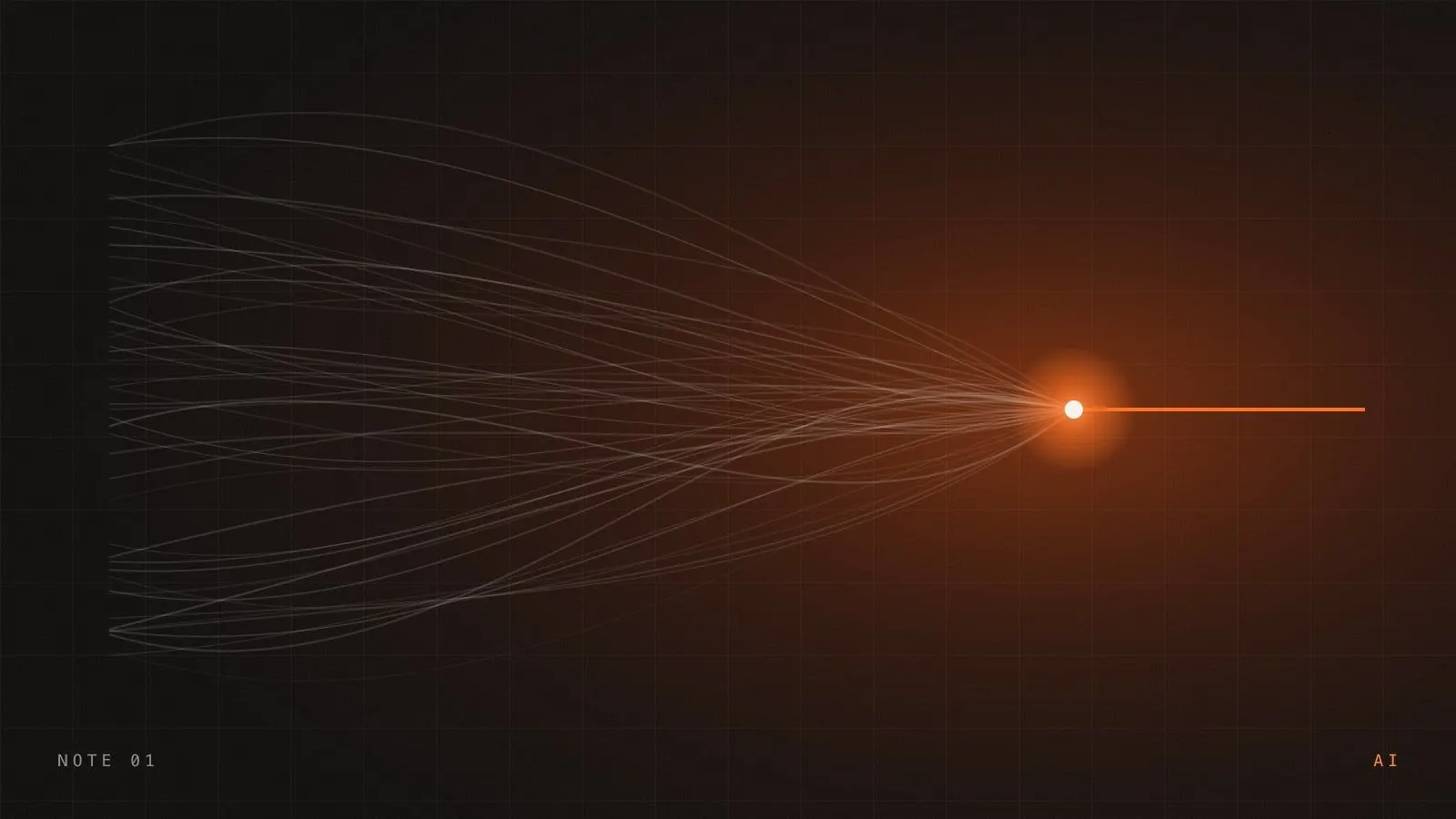
Our answer, arrived at the slow way, is that generation is excellent at volume and terrible at judgement. It will give you forty openings for a landing page in ninety seconds. It will not tell you that the client's real problem is that nobody trusts their pricing. The first is a drafting problem. The second is the actual job.
The draft is where it pays
Every project has a cold start. A blank artboard, an empty content model, a schema nobody has argued about yet. That stretch used to cost days and produce work we threw away anyway. Now it costs an afternoon, and we throw away more of it, faster, which is the point. Volume at the draft stage buys you range: you see the obvious idea early enough to reject it.
On the Northbound pricing engine we generated eighteen variations of the quote screen before a single conversation about layout. Not one shipped. All eighteen made the conversation sharper, because the team was reacting to something instead of imagining it.
Generation is excellent at volume and terrible at judgement. Design is mostly judgement.
Where we hold the line
Three decisions never leave human hands, and we say so in the proposal.
- What problem we are solving. A model will happily optimise the wrong brief for as long as you pay for tokens.
- What ships. Selection is the craft. Anything that reaches a client has been chosen by someone whose name is on it.
- What we tell the client. Every deliverable carries a note on how it was made. Nobody discovers it later.
What it changed in practice
The measurable effect is not fewer people. It is a shorter distance between a question and something you can react to. Discovery that used to take three weeks now takes one, because we arrive at the second meeting with working screens instead of a moodboard.
The unmeasurable effect is more interesting. When drafting is cheap, the team argues about the right things: whether this is even the product, whether the pricing makes sense, whether anyone asked for it. That is the work clients remember paying for.